What a glorious day Thursday was. A blue sky, strewn with high clouds, flat calm and a t-shirt temperature. Good enough for a picnic with the family down at Stutton Ness.
Birds were going to be a bit of a side issue. I had my bird fix earlier in the morning with a summer-plumaged Slavonian Grebe in Holbrook Bay and my first Willow Warbler of the year near Stutton's very own Wolves Wood (not the RSPB one near Hadleigh).
Over the last couple of days, I have discovered a smart little moth
Eriocrania subpurpurella. It's a shiny little gold chap, the larvae of which mine oak leaves. It is quite common, but understandably over-looked. Now I have seen it once, they keep popping up whenever I find myself under an oak tree with a bit of herbage around it for the males to lek on. Well that is what they seem to be doing when the sun is out. Some of the day-flying micros really do warrant a closer look.
Eriocrania subpurpurella (I think)
When we got down to Stutton Ness my attention was drawn to the bare soil at the base of a fallen oak. As part of my tentative steps towards learning a bit more about bees and wasps, this seemed a likely spot.
Sure enough, my instincts proved correct. There was a bee-fly charging around (with apologies for image quality - just a point and shoot job):
Bee-fly Bombylius major
I then noticed another
aculeate that at times seemed to be taking an interesting in the bee-fly. The wasp-like abdominal pattern and dangling legs certainly made it stand out (queue even worse shot):
Bee-fly with unidentified admirer
The mystery insect eventually settled and I managed a couple of record shots. I should be very grateful if anyone can identify it.
Was'at?
On the way back we came across this shrivelled fellow on the path.
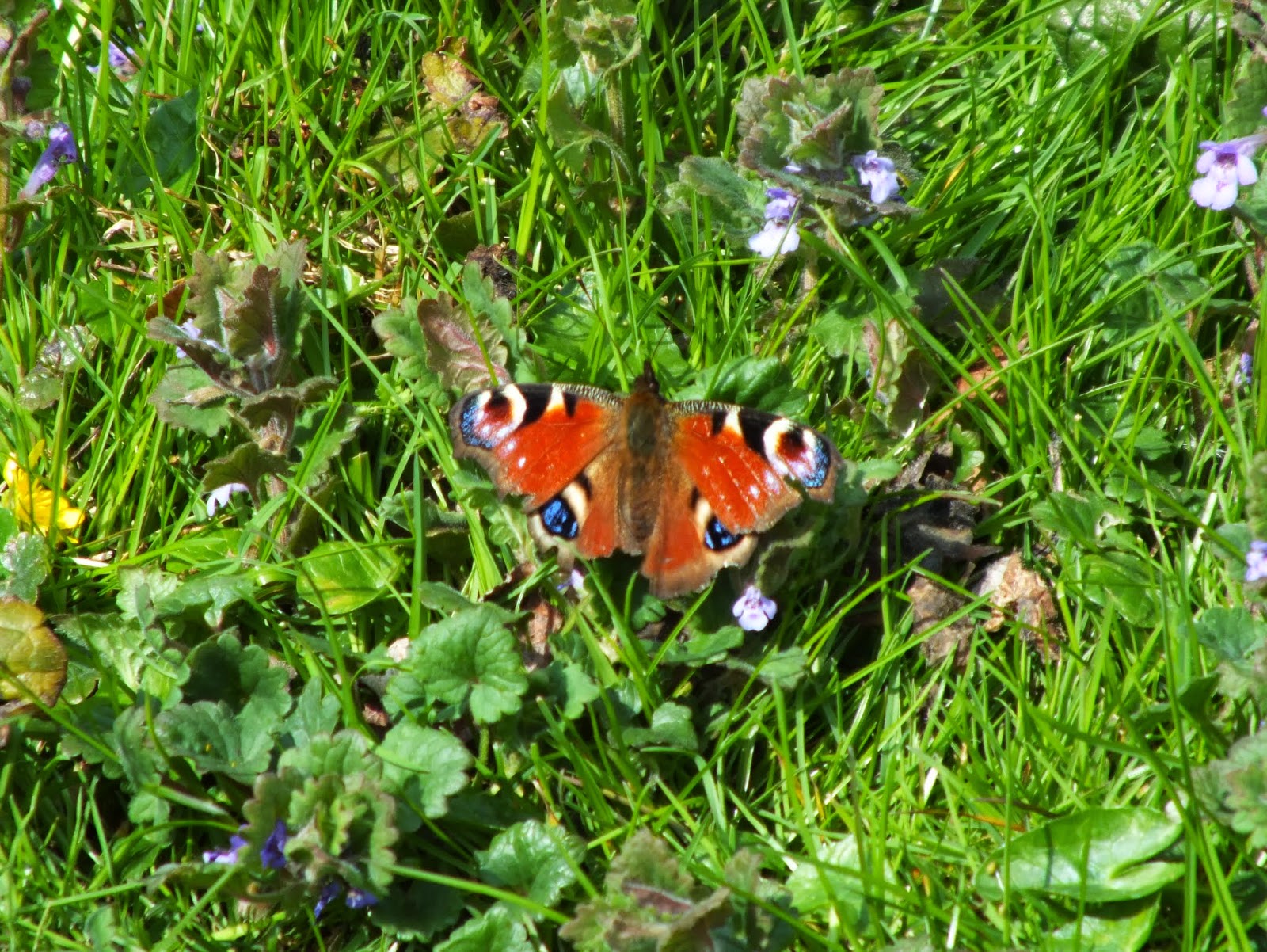
as well as a Peacock:
and a Blackcap: